Amid the peaceful countryside of Binh My, where vast rice fields stretch across the landscape and traditional village life has been preserved for generations, An Thai Communal House stands quietly with its ancient and timeless beauty, serving as a witness to the flow of history. More than a place of worship for the village guardian deities, the communal house is also a cultural and spiritual center for the local community, preserving valuable historical, architectural, festival, and cultural traditions of the Northern Delta.
For centuries, An Thai Communal House has remained an important part of the local community, becoming a spiritual support for local people and a meaningful cultural heritage site that contributes to the identity of Ninh Binh Province.
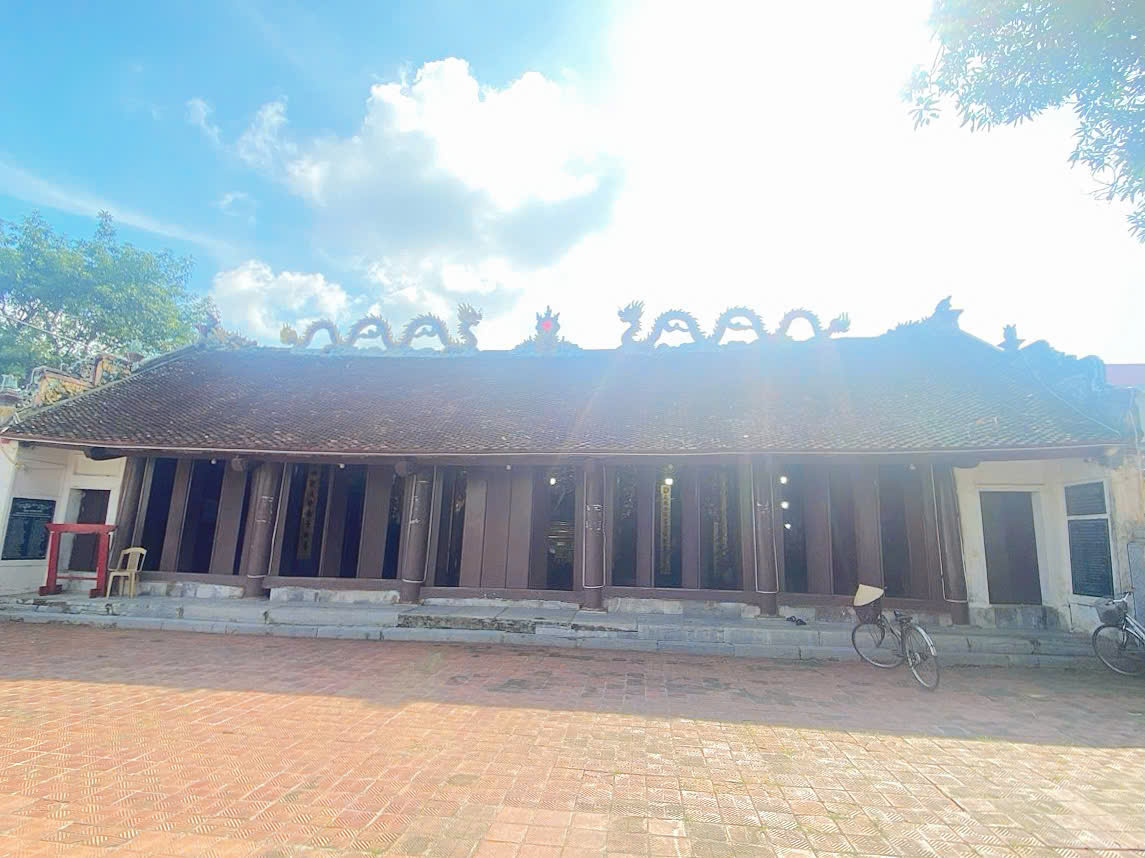
An Thai Communal House is located in An Thai Hamlet, Binh My Commune, Ninh Binh Province. According to preserved Han-Nom documents, legends of the deities, and historical records, the communal house was built to worship three village guardian deities: Hoang Cong, Uy Cong, and Do Cong.
According to local legend, the three deities were heroes who helped the king fight against invaders, protect the country's borders, and bring peace to the people. Thanks to their military talent and loyalty, they were highly respected by the royal court. After they passed away, the local people built the communal house to honor their contributions and pray for their protection, recognizing them as the guardian deities of the village.
Records of the deities compiled in 1938 indicate that, the three deities were granted royal titles many times by different feudal dynasties in recognition of their contributions to "protecting the country and safeguarding the people." These royal decrees and deity records, which are still preserved today, not only reflect the tradition of honoring those who made great contributions but also serve as valuable historical documents about the spiritual life of people in the Northern Delta.
Despite the changes of time, An Thai Communal House has always been carefully preserved and restored by local people. It has become a symbol of community unity, the Vietnamese tradition of remembering those who came before, and the patriotic spirit of the local community.
An Thai Communal House is one of the typical examples of traditional architecture in the Northern Delta. According to the heritage survey records and the site protection planning drawings completed in 1989, the communal house was built in the traditional five-compartment layout with a balanced and harmonious design.
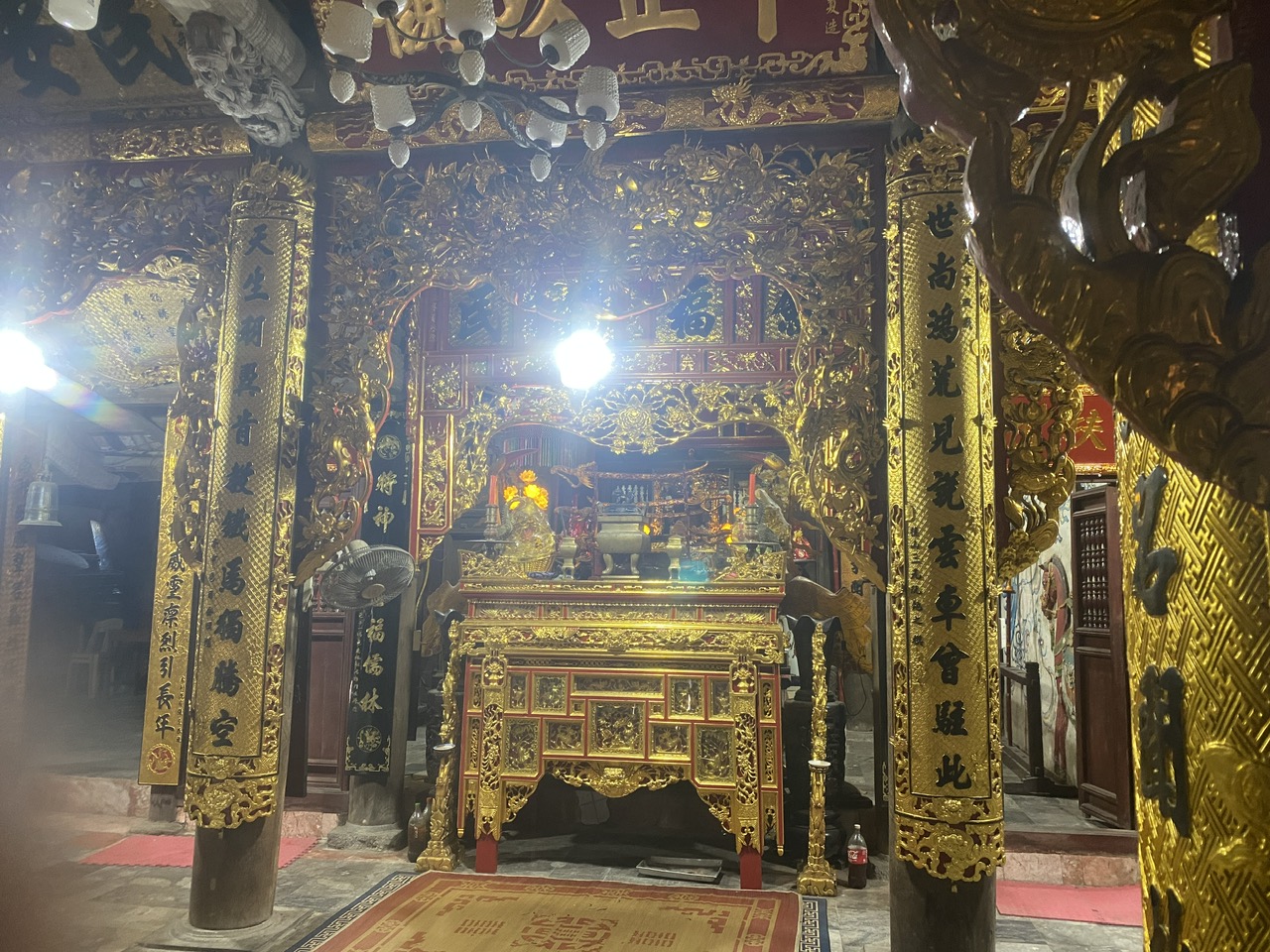
One of its outstanding features is the large wooden columns and the timber frame connected by mortise-and-tenon joints, a traditional construction technique used by earlier generations. This method creates a strong and durable structure while demonstrating the fine craftsmanship of traditional Vietnamese carpentry. Inside, the main central compartment contains the altar and ancestral tablets dedicated to the village guardian deities, while the side compartments are used for worship ceremonies and community religious activities.
The roof is covered with traditional clay tiles and designed with a steep slope. The curved roof corners and roof ridge are decorated with images of sacred animals such as dragons and phoenixes, along with many decorative patterns representing good fortune. These architectural details not only give the communal house its dignified appearance but also reflect the aesthetic values and philosophy of life of the Vietnamese people in the past.
Surrounding the communal house is a peaceful green landscape with a pond, a spacious courtyard, and ancient trees providing shade throughout the year. According to traditional feng shui beliefs, the pond in front of the communal house represents the "bright hall gathering water," symbolizing the gathering of positive energy that brings peace and prosperity to the village. The harmony between architecture and nature gives An Thai Communal House its unique charm, allowing every visitor to experience a sense of peace and tranquility.
One of the special values that makes An Thai Communal House so attractive is its rich collection of preserved Han-Nom documents.
The site still preserves many deity records, royal decrees, ceremonial texts, parallel sentences, large-character calligraphy panels, and poems written in Han characters praising the merits of the village guardian deities and the beauty of An Thai. These valuable materials provide important sources for studying local history, folk beliefs, customs, and the cultural life of people in the Northern Delta through different historical periods.
Through these deity records and royal decrees, later generations can better understand the origins of the deities worshipped here, their achievements in protecting their homeland and the country, as well as the formation and development of the local community.
It can be said that An Thai Communal House is not only a place for religious practice but also a "living archive" that preserves the historical memories and cultural identity of a traditional Vietnamese village.
For generations, An Thai Communal House has been the venue for important cultural and religious activities of the local community. According to preserved customary records and village regulations, many worship ceremonies are held here every year in connection with the agricultural calendar and community life.
The main festival takes place in early spring, when local people and villagers living afar return to offer incense to the village guardian deities and pray for favorable weather, national peace and prosperity, abundant harvests, and a happy and prosperous life.
Within the sacred atmosphere of the ancient communal house, traditional ceremonies such as offering incense, worshipping the village guardian deities, reading ceremonial prayers, and presenting offerings are carried out respectfully according to customs that have been preserved for many generations.
After the ceremonial rituals, the festival continues with lively cultural performances, sports exchanges, traditional folk games, and many other community activities. These traditions not only help preserve intangible cultural heritage but also strengthen the bond between generations, foster love for the homeland, and preserve the cultural identity of Vietnamese villages.
With the growing development of cultural tourism and experiential tourism, An Thai Communal House has become an attractive destination for visitors who enjoy exploring traditional values, learning about ancient communal house architecture, folk beliefs, and the distinctive cultural space of the Northern Delta.
By visiting An Thai Communal House, visitors can not only admire an ancient architectural work but also experience the peaceful rhythm of Northern Vietnamese village life, listen to historical stories passed down through generations, and discover the cultural values that have shaped the identity of Binh My.
Amid modern life, An Thai Communal House continues to quietly preserve the soul of the Vietnamese countryside, where the past and the present come together in a cultural space rich in national identity. The communal house is not only a source of pride for local people but also a highlight on the journey to discover the cultural heritage of Ninh Binh - a land where history, nature, and people come together, always warmly welcoming visitors from near and far.