Located within the Tràng An Scenic Landscape Complex, a UNESCO World Cultural and Natural Heritage Site, and spatially connected to Bái Đính Pagoda, Ui Valley lies in Tây Hoa Lư Ward, Ninh Bình. This enclosed valley brings together pristine natural scenery, profound historical depth, and distinctive cultural and spiritual values.
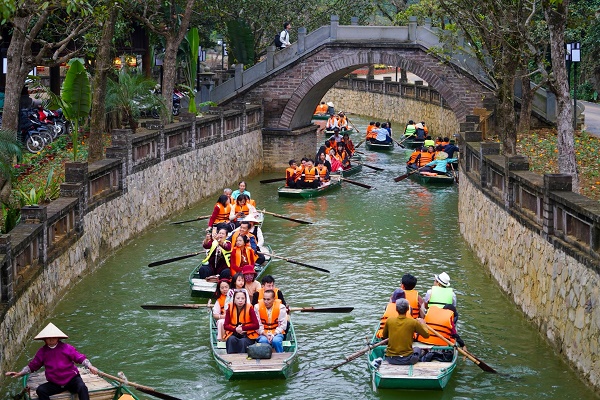
Covering approximately 270 hectares, Ui Valley features the characteristic topography of Ninh Bình province, with majestic limestone mountains encircling the area and a system of natural lakes whose jade-green waters lie hidden beneath towering cliffs. The landscape creates a serene, otherworldly atmosphere, completely removed from the bustle of urban life.
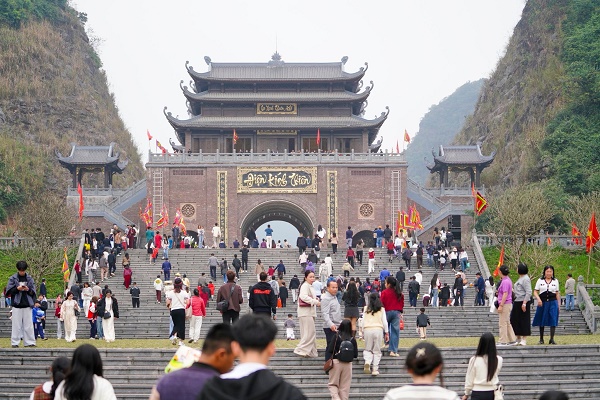
Beyond its striking natural beauty, Ui Valley is also a site of significant historical and spiritual importance. It is home to a number of notable architectural structures, most prominently the Kính Thiên Altar (Nam Giao Altar), where feudal dynasties once performed sacred rites to Heaven. In addition, several architectural works are reconstructed based on the ancient Eastern philosophy of the “Three Powers” (Heaven – Earth – Humanity), including Kính Thiên Terrace, Kính Địa Terrace, and Kính Nhân Terrace.
According to historical records, at the highest point of this valley, King Đinh Bộ Lĩnh performed a ritual to Heaven before launching his campaign to suppress the Twelve Warlords and unify the country. In 968, after achieving national unification and ascending the throne, he proclaimed himself King Đinh Tiên Hoàng, named the country Đại Cồ Việt, adopted the reign title Thái Bình, and established Hoa Lư as the capital - marking the beginning of Vietnam’s first centralized feudal state.
Alongside the establishment of an independent nation, the Đinh dynasty instituted three foundational grand ceremonies, among which the Heaven-worship ritual was the most important. Conducted at the Kính Thiên Altar, it symbolized the court’s political philosophy and spiritual beliefs, while also praying for favorable weather, national peace, and prosperity.
Today, the Kính Thiên architectural complex has been reconstructed at the highest point of the valley, featuring a three-layered gate system aligned along a central axis: Nhân Gate (Human), Địa Gate (Earth), and Thiên Gate (Heaven). This layout reflects the ancient “Tam Tài” philosophy, in which Heaven, Earth, and Humanity form the universe. Each gate is adorned with traditional decorative motifs, showcasing refined construction techniques and classical architectural aesthetics.
In addition to its royal and spiritual architectural space, Ui Valley also recreates the traditional cultural life of the Mường ethnic community. Visitors can explore stilt houses and experience folk activities during festivals, such as bamboo dancing, spinning top games, and stilt walking - enriching the overall cultural experience.
With its enclosed valley landscape, limestone mountains, interwoven natural water systems, and a unique blend of tourism experiences rooted in history and culture, Ui Valley tourist attracions has become an increasingly attractive destination for both domestic and international visitors.