On the ancient land of Ninh Binh – a region that once witnessed the formation and development of numerous traditional handicrafts – Bo Bat pottery village emerges as a historic hallmark of Vietnam’s ceramic heritage. Quiet and unassuming, Bo Bat embodies the silent beauty of an old craft village, where earth, water, fire and human hands have harmonized to create rustic and enduring ceramic products that have withstood the test of time. From this very land, Vietnamese pottery originated, spread and left a profound imprint on the nation’s cultural journey.
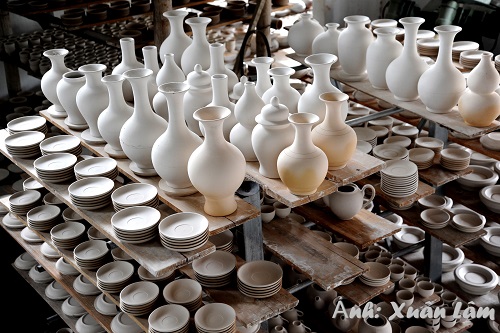
The ancient Bo Bat pottery village, now known as Bach Lien Village in Dong Thai Commune, Ninh Binh Province, was once renowned for its distinctive and refined white-glazed ceramic products. The village is home to a rare type of clay known as Bo Di clay, also called “dew-soaked clay”. This precious material is characterized by its ability to produce a white glaze and requires only 50–70 percent of the firing time compared to other types of clay, while still ensuring superior quality in terms of smoothness and hardness. After firing, products made from this clay are less prone to cracking or breaking than those made from other clays.
Bo Bat pottery boasts a history spanning thousands of years, as evidenced by layers of fired earth and densely scattered pottery shards discovered throughout the area. During the Dinh and Early Le dynasties, the village’s skilled artisans created high-quality products to be presented to the royal court, including fired bricks inscribed with “Dai Viet quoc quan thanh chuyen” – bricks specifically used for citadel construction – as well as sophisticated ceramic items such as dragon heads, mythical animal faces, bowls, plates and household utensils.
Historical records indicate that when King Ly Thai To relocated the capital to Dai La Citadel, he brought along five major clans from Bo Bat to help build the new capital and produce ceramic and porcelain items for both royal and civilian use. These artisans later settled in areas along the Red River, establishing what is now known as Bat Trang pottery village. From that point on, the people of Bo Bat gradually lost their traditional craft, and pottery making in the village eventually faded into obscurity.
Today, alongside the growth of Ninh Binh’s tourism industry, the ancient pottery craft of Bo Bat has been revived and is flourishing once again. Bo Bat ceramic and porcelain products are diverse, ranging from everyday household items such as teapots, cups, bowls, plates and vases to souvenirs and decorative objects like wind chimes, necklaces and ceramic art paintings. All products are meticulously handcrafted and coated with “gan” glaze – an antique-style glaze that is white with deep tones, offering high durability and fine texture.
With skillful hands and deep affection for their homeland, local artisans breathe life into each ceramic piece through decorative patterns and stylized motifs inspired by the majestic landscapes of Ninh Binh. Beyond traditional designs, contemporary Bo Bat pottery products also incorporate iconic tourism images of the ancient capital, such as Trang An Scenic Landscape Complex, Tam Coc – Bich Dong and Bai Dinh Pagoda, thereby contributing to the promotion of Ninh Binh as a land of millennia-old history and rare, breathtaking natural beauty.