Hidden among the limestone mountains of the Thung Ui Cultural Tourism Area, Tay Hoa Lu Ward, Ninh Binh Province, Boi Cave is a destination of pristine beauty and exceptional archaeological value. The cave preserves precious traces of the presence and way of life of prehistoric people more than 12,000 years ago, opening up a journey into the historical depth of the Trang An heritage region.
Located in the core zone of the Trang An Landscape Complex, a World Cultural and Natural Heritage Site, Boi Cave is one of Ninh Binh’s most notable archaeological sites. Discoveries of stone tools, mollusk shells and other traces of daily life show that humans once lived in the cave more than 12,000 years ago. In particular, the layers of snail and mollusk shells accumulated near the cave entrance are vivid evidence of how ancient inhabitants gathered natural food sources, adapted to their environment and lived within the limestone landscape of Trang An.
These archaeological remains are not only of scientific significance but also help reconstruct the history of human settlement in Ninh Binh over tens of thousands of years. As a result, Boi Cave has become a special link between adventure tourism and a journey into the evolution and development of humankind.
The trip to Boi Cave is also an exciting experience of exploring nature. From the Thung Ui forest gate, visitors follow a small path through cool green canopy, covering about 1 km and nearly 200 stone steps to reach the cave area, at an elevation of about 100 m above the foot of the mountain.
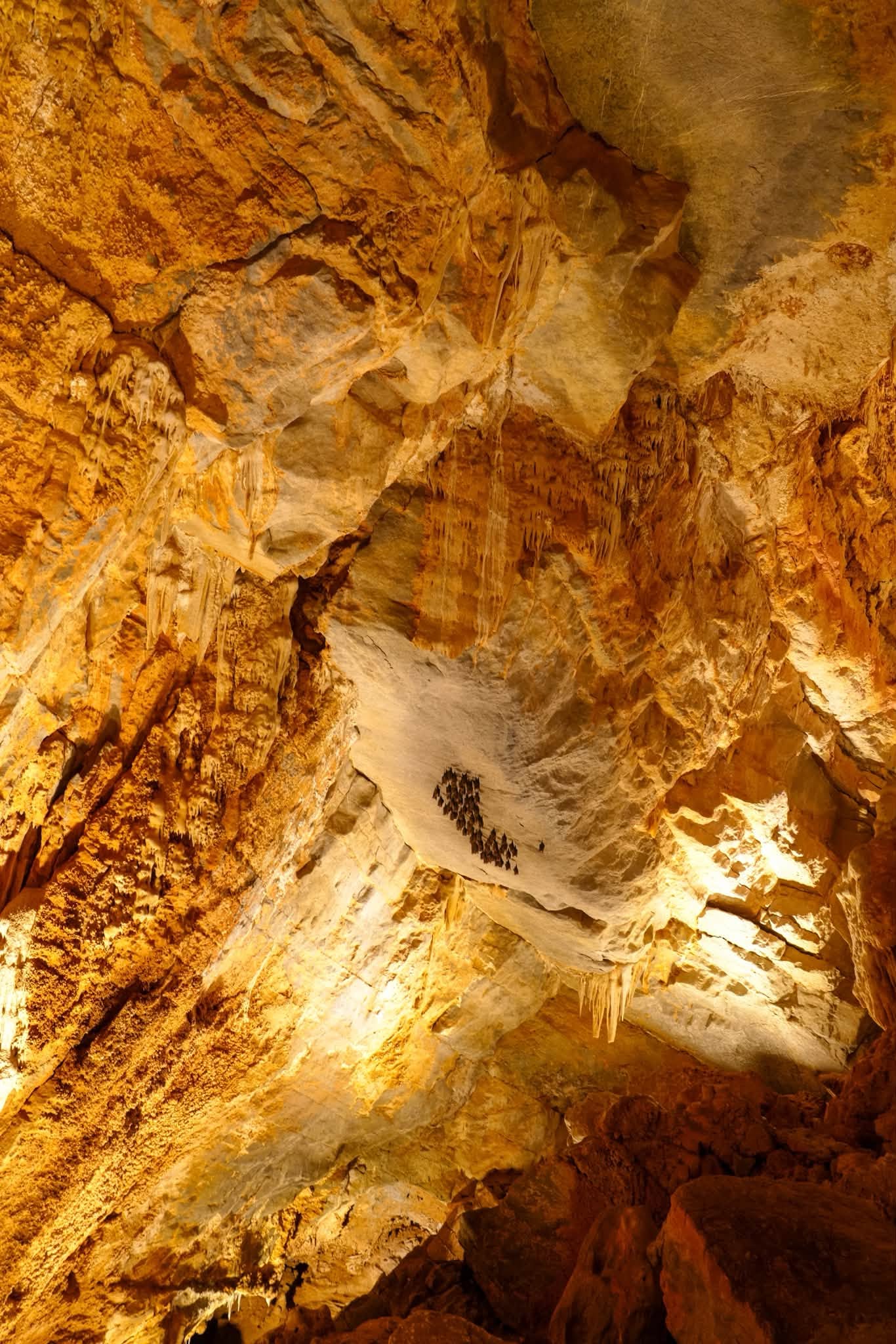
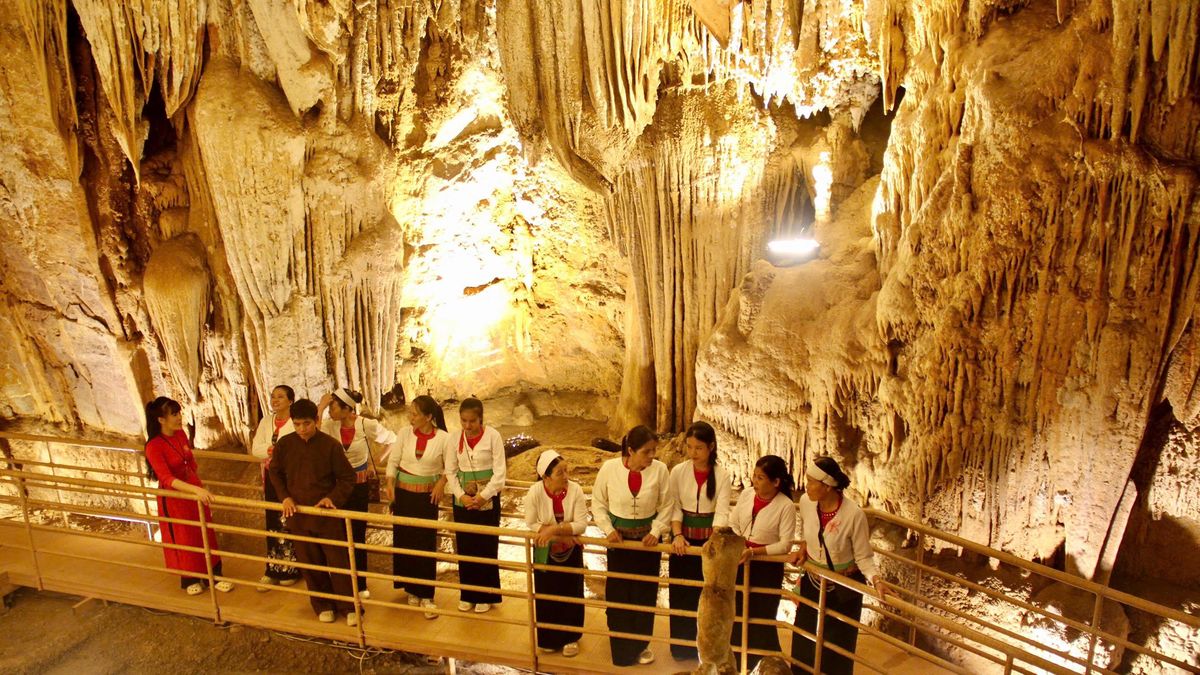
Deep inside the limestone mountain, Boi Cave has a spacious chamber about 70 m deep and 30–50 m wide. Over millions of years of natural formation, stalactites and stalagmites have taken on many unique shapes, resembling a lotus flower, a dragon, a throne, or the Buddha entering Nirvana.
The deeper visitors go into the cave, the more they feel the mysterious beauty of the natural world. Stone formations of varied shapes, a tranquil atmosphere and light filtering through create a scene that is both magical and captivating. The combination of geological and geomorphological beauty with archaeological traces gives Boi Cave its distinctive appeal.
Beyond its association with prehistoric habitation, Boi Cave is also wrapped in folk stories tied to the history of the Hoa Lu Ancient Capital region. According to local legend, during the second resistance against the Yuan-Mongol invasion in 1285, King Tran Nhan Tong and his soldiers passed through this area. Finding a cave with a wide rock overhang, ideal for resting, the king cast a divination to guide his army’s march. The divination was said to foretell victory, and from then on local people called the place Boi Cave, also known as Thung Boi.
Although it is a folk legend, the story adds cultural depth and appeal to the destination, helping visitors better sense the connection between the natural landscape, history and the spiritual life of local people across generations.
With its outstanding archaeological, geological, scenic and cultural values, Boi Cave adds a unique highlight to the journey of exploring Thung Ui in particular and the Trang An heritage region in general. Here, visitors can not only admire the wondrous beauty of nature but also hear the story of human life from tens of thousands of years ago, a meaningful journey back in time through the heritage land of Ninh Binh.