The Fourth Industrial Revolution, with the far-reaching power of information technology and digitalization, is bringing profound changes to economic and social life worldwide. For the tourism sector, promoting the application of information technology and digital transformation is an inevitable trend. It helps renew management methods, diversify promotion and marketing activities, and offer visitors richer and more convenient experiences.
Seizing on this trend, Ninh Binh has identified the application of information technology and digital transformation as one of the key solutions for improving the effectiveness of state management, promoting the destination’s image, supporting businesses and improving the quality of service for tourists. In the first nine months of 2026, digital transformation in tourism continued to be stepped up, gradually forming a smart tourism ecosystem linked to heritage conservation and promotion and to sustainable tourism development.
Stepping up digital transformation from management to tourism promotion
In the first nine months of 2026, the Ninh Binh Department of Tourism focused on carrying out tasks in science, technology, innovation and digital transformation. The Department drew up a plan to implement Resolution No. 57-NQ/TW of the Politburo, established a Steering Committee for the development of science, technology, innovation, digital transformation, administrative reform and Project 06, and prepared the Steering Committee’s 2026 action plan.
In addition, the Department launched an emulation plan titled “Innovation, development of science and technology, digital transformation and green transition” for the tourism sector for the 2026–2030 period. It also issued regulations on ensuring information safety and security in IT activities and set up a Management Team for building Ninh Binh’s digital tourism data. Draft frameworks for data architecture, governance and digital data management, as well as plans for building, digitizing and managing the tourism sector’s database, are also being developed and finalized. The digitization of tourism documents has been carried out, helping to gradually standardize data, improve the efficiency of information use and serve management work.
Notably, the Department proposed merging and carrying over public investment capital for the tourism sector’s digital transformation tasks under the name “Digital Data and AI System for the Management, Conservation and Promotion of Heritage Values and Smart Tourism in Ninh Binh Province.” This is an orientation aimed at strengthening the use of digital data and artificial intelligence in heritage management and conservation, destination promotion and the development of smart tourism products.
Developing digital platforms and improving the visitor experience
One of the key tasks is to work with consulting units and relevant agencies to speed up the completion of the Ninh Binh Tourism Information Portal. The system is designed to integrate destination data, digital maps, search tools, an online chatbot to support visitors, and cashless payment, while also strengthening connection and data sharing with the province’s digital tourism information systems. As a result, visitors can access information more conveniently, learn about destinations on their own initiative, plan itineraries and choose suitable services.
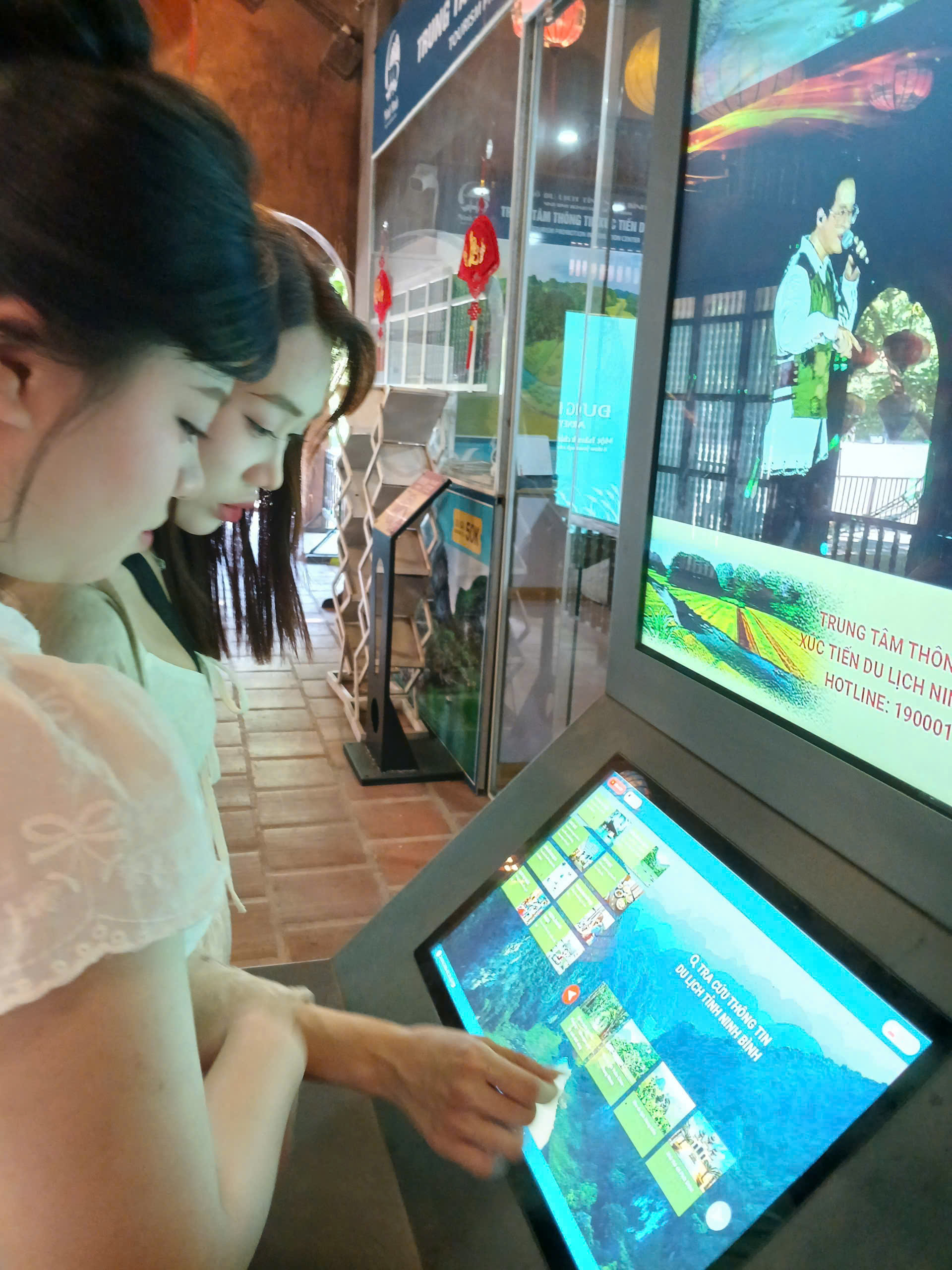
Alongside completing the online platform, the supporting infrastructure for tourism information continues to be maintained. Ninh Binh currently operates 5 information kiosks at Bai Dinh Pagoda, Trang An, Dong Gung, Bich Dong and Tam Coc, along with 32 free Wi-Fi points for visitors. In the first nine months of 2026, the system recorded more than 75,000 visits for tourism information. In addition, the production and installation of QR code signs for scanning and installing the “Ninhbinhtourisminfo” smart tourism app have helped expand access to digital information, with nearly 560 installations recorded.
The application of information technology in tourism also aims to provide diverse and visual information and to increase interactivity. Mobile applications, online search, ticket booking and electronic payment solutions are being actively rolled out, enabling visitors to be more proactive in exploring and experiencing destinations. Virtual reality (VR) and augmented reality (AR) also hold potential for presenting the landscapes and heritage of destinations such as Trang An and Tam Coc – Bich Dong in a vivid and appealing way, giving visitors more information before and during their visit.
Digital marketing spreading Ninh Binh’s image online
Tourism promotion on digital platforms continues to be maintained and renewed. The sector’s websites provide content in three languages (Vietnamese, English and French) and make effective use of social media platforms such as Facebook, Zalo, TikTok and Twitter to expand reach to visitor markets, introduce products and update information on tourism activities.
In the first nine months of 2026, the tourism sector wrote and published 1,875 news items, articles, photos and audio pieces, attracting more than 13.5 million visits. The content focused on introducing the locality’s resources, destinations, tourism products, events, festivals and distinctive experiences. Combining multiple content formats makes tourism information more visual and lively, in line with how visitors consume information in the digital age.
In particular, the tourism sector has developed a digital communications strategy on social media platforms. In the first nine months of the year, 398 videos, posts and communication items covering about 28 events and festivals inside and outside the province were produced, attracting nearly 52 million interactions. This result has helped widen the reach of Ninh Binh’s tourism image, strengthen connections with the public and create more opportunities to promote tourism products and services in the digital environment.
Spreading digital skills in the community, linking digital transformation with heritage conservation
In addition to developing technological infrastructure and platforms, Ninh Binh pays attention to improving digital skills for residents, businesses and communities involved in tourism. In implementing the plans and directives of the central government, the province and the Party Committee of the Department of Tourism on digital transformation, the “Digital Literacy Movement” (Binh dan hoc vu so) has been carried out by developing a set of digital tourism learning materials consisting of 12 clips, encoded in QR codes and sent to localities to guide residents and businesses in digital skills. The lesson links are also publicized on YouTube, Facebook and the website, making it easy for the community to access, learn and apply them in practice.
To date, nearly 30 video clips in the “Digital Literacy Movement” series have been produced and published. This is a practical resource for raising awareness and technology skills, and for helping residents and tourism businesses promote their products, connect with customers and gradually take a deeper part in the digital business environment.
Digital transformation is also tied to the task of conserving and promoting heritage values. Ninh Binh is applying digital technology to build a digital database of scientific documents and representative archaeological artifacts of the Trang An Landscape Complex for the 2007–2020 period. It is also using the Artifact Management Information System and the Monument Management Information System software within the heritage area. The digitization and management of heritage data contribute to storage, retrieval and scientific research, improve management efficiency and lay the foundation for developing ways of presenting heritage using modern technology.
Towards a smart, modern and sustainable tourism ecosystem
These digital transformation efforts are being carried out as Ninh Binh tourism continues to record positive growth. In the first nine months of 2026, the province is estimated to have welcomed over 20.958 million visitors, up 25.54% from the same period last year, of which domestic visitors exceeded 18.516 million and international visitors exceeded 2.442 million. Tourism revenue is estimated at over VND 21,979 billion, up 23.54% from the same period last year.
These results call for continued innovation in management methods and improvements in the quality of information, promotion and visitor support. In the coming period, Ninh Binh’s tourism sector will continue to complete its digital database, develop the Tourism Information Portal, and step up the application of artificial intelligence and new technologies suited to practical conditions. It will also push for stronger data connection and sharing, improve the quality of digital communications and support businesses in transforming their management and business models.
With its advantages in natural landscapes, cultural heritage and a rich system of tourism products, promoting the application of information technology and digital transformation will give Ninh Binh added momentum to improve its competitiveness, expand market access and better meet visitors’ needs. Digital transformation is not only about bringing technology into tourism activities but also a process of renewing thinking and the ways of managing, promoting and serving, helping Ninh Binh develop in a green, smart, modern and sustainable direction.