Located beside the gentle Sắt River in Cao Cát hamlet, Bình Mỹ commune, Ninh Bình province, the Historical Site Commemorating President Hồ Chí Minh's Talk with Cadres and People of Hà Nam on Combating Drought is one of the representative "red addresses" of the former Hà Nam land. It not only marks a historical event of special significance in the life and work of President Hồ Chí Minh but is also a destination rich in cultural and traditional educational value, and a meaningful stop on a journey exploring the culturally distinctive countryside of Ninh Bình province.
From the center of Phủ Lý ward, it takes only about 15 km along National Highway 21B to reach the site. Its convenient location makes it easy to connect with many famous cultural and historical destinations in the area, such as Trần Thương Temple, Long Đọi Sơn Pagoda, the Nam Cao Memorial Site, and the Memorial Site of Tam Nguyên Yên Đổ Nguyễn Khuyến, forming an appealing itinerary that helps visitors better understand the history, culture, and people of the Red River Delta.
The site commemorates the event of January 14, 1958, when President Hồ Chí Minh visited and personally encouraged the cadres, workers, and people of Hà Nam who were building the Cát Tường dam to fight drought and save the rice crop. At that time, the 1958 winter-spring crop faced severe drought that seriously threatened agricultural production. Thousands of cadres, workers, and farmers labored day and night on the construction site, determined to bring water back to save the fields.
Amid that urgent atmosphere of labor, Uncle Hồ's appearance became a great source of encouragement for all the cadres and people. He warmly asked after everyone, praised their spirit of overcoming difficulties, and urged them to unite and make every effort to complete the project as soon as possible in order to save the rice in time. Following his advice, the Cát Tường dam was completed ahead of schedule, bringing water to irrigate thousands of mẫu (traditional land units) of fields, helping protect the harvest and giving the people confidence and motivation in their labor and production.
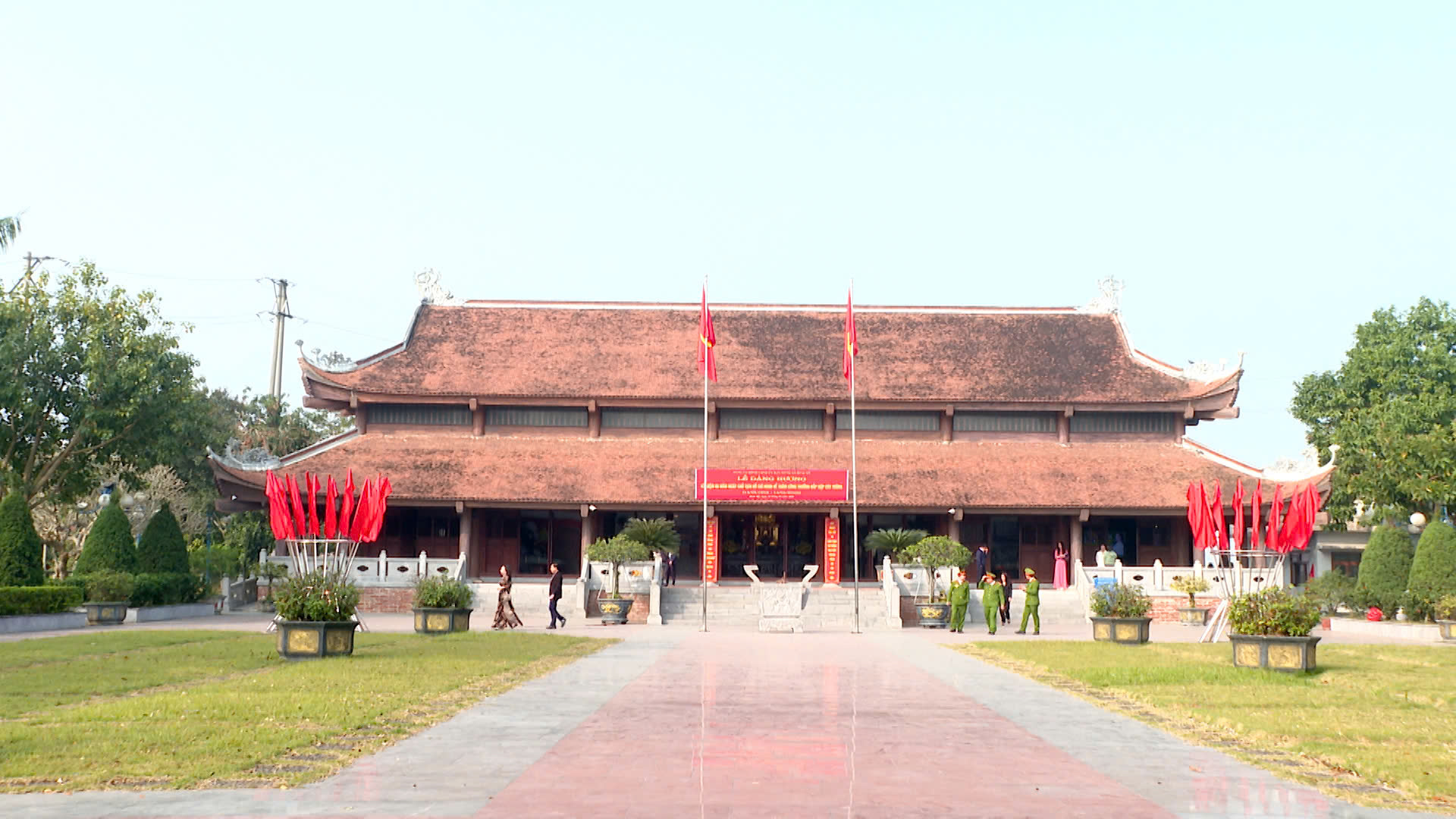
Today, covering about 1 hectare, the site has been spaciously planned, harmonizing a memorial space with cool green landscaping to create a destination that is solemn yet approachable. The complex has two main components: the Commemorative Stele House and the Temple of President Hồ Chí Minh.
The Stele House is built in the traditional phương đình (square pavilion) style, with a square floor plan, a two-tiered curved roof, a sturdy ironwood (lim) frame, and a dignified blue-stone floor. In the center of the stele house stands a stone stele inscribed with an account of President Hồ Chí Minh's visit to encourage the cadres and people of Hà Nam in fighting drought in 1958. This is where visitors can better understand the historical significance of the event and the deep affection he held for the working people.
One of the images that moves visitors most is the commemorative banyan tree planted at the very spot where Uncle Hồ stood and spoke with the cadres and people in those days. After many decades, the banyan remains lush, casting cool shade beside the Sắt River, and has become a symbol of enduring vitality, sacred memory, and gratitude toward the beloved leader of the nation.
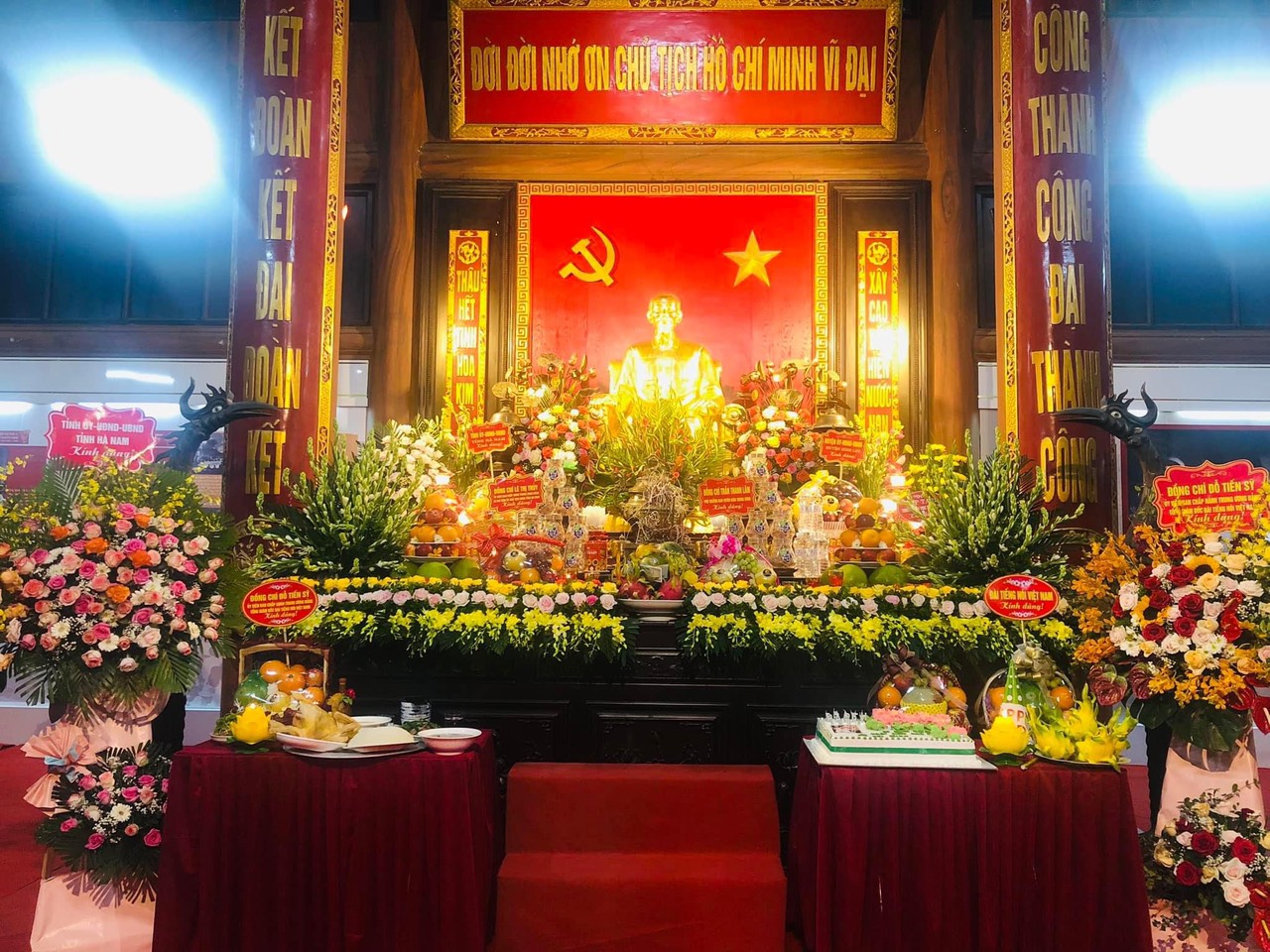
Behind the Stele House is the Temple of President Hồ Chí Minh, built in traditional Northern Vietnamese architecture on an imposing scale, with seven main bays and two side bays. The structure stands out for its stone gateway, finely carved stone screen, lotus pond, and cool green gardens, creating a serene and solemn space. Inside the temple are a bronze statue of President Hồ Chí Minh and many precious images and documents reflecting his historic visit and milestones in the building and development of the homeland.
Beyond preserving historical values, the site is also a meaningful destination for traditional education, historical research, sightseeing, and cultural experiences. Each year, on the anniversary of Uncle Hồ's visit to Hà Nam (January 14), on President Hồ Chí Minh's birthday (May 19), on National Day (September 2), and on the country's other major holidays, large numbers of cadres, Party members, pupils, students, and people from inside and outside the province come to offer incense, pay tribute, and take part in traditional education activities, helping spread fine values of patriotism, solidarity, and the will to overcome hardship.
On today's journey of discovering Ninh Bình, the site is not only a keeper of the memory of a historically meaningful event but also a destination that helps each visitor understand and cherish more deeply the lasting values left by President Hồ Chí Minh. In the peaceful setting of the countryside beside the Sắt River, every step taken here becomes a return to the roots of history, nurturing national pride and giving new motivation to preserve and promote fine traditional values for generations today and tomorrow.