The Đào Family Temple is located in Đông Trang Village, Nam Hoa Lư Ward, Ninh Bình Province — a land rich in historical and cultural traditions, where many distinctive values of the Vietnamese nation have been preserved and passed down through generations. Within the ancient atmosphere of the former imperial capital, the Đào Family Temple stands as a vivid symbol of the long-standing tradition of ancestral worship, closely connected with the formation and development of the local community over many centuries.
The temple serves as a place of commemoration and worship for prominent members of the Đào lineage who rendered great services to the nation throughout different historical periods. Among them, the most notable are two historical figures from the Trần Dynasty: Đào Dương Bật, a doctoral laureate of the Trần Dynasty who was entrusted by the king with the mission of recruiting settlers and establishing new communities, establishing the Đông Trang settlement during the resistance against the Yuan–Mongol invasions; and Đào Sư Tích, the Trạng nguyên (the highest-ranking scholar in the imperial examination) of the Trần Dynasty in 1374, who later held the high court position of Nhập nội Hành khiển (Equivalent to the position of Deputy Prime Minister today). The relic site also venerates several other distinguished members of the Đào lineage from the Later Lê Dynasty, including Đào Sỹ Từ, Đào Sỹ Kỳ, Đào Sỹ Lê, and Đào Sỹ Hựu.
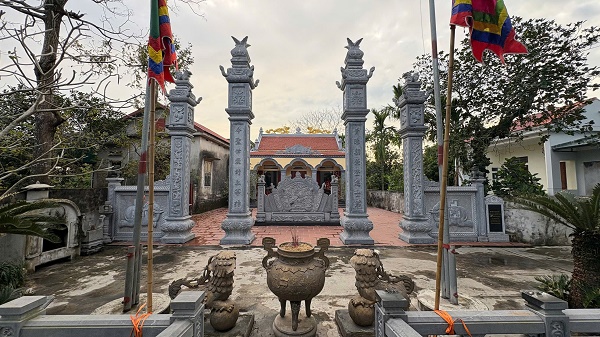
The architecture of the Đào Family Temple bears strong characteristics of traditional Vietnamese design, featuring a system of ironwood pillars and beams, a roof covered with traditional tiles, and numerous ancient wood carvings that have been carefully preserved. The main sanctuary houses many valuable historical artifacts, including royal decrees issued during the Nguyễn Dynasty, which reflect the spiritual belief in honoring ancestors and recognizing the contributions of forebears to the country.
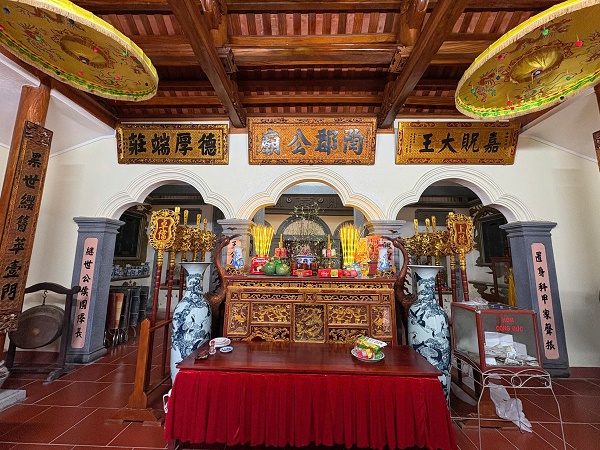
The Đào Family Temple is not only an architectural work of traditional artistic value but also a repository of valuable historical records documenting the scholarly tradition of the Đào lineage and the history of the Hoa Lư region. Today, the temple continues to serve as the spiritual and cultural center for descendants of the Đào family. On ancestral commemoration days and traditional ceremonies, family members from many places gather here to commemorate the merits of their ancestors, reconnect with one another, discuss family affairs, and strengthen their deep sense of community.
The Đào Family Temple was officially recognized as a National Historical and Cultural Relic under Decision No. 2379/QĐ-BT dated September 5, 1994, issued by the Ministry of Culture, Sports and Tourism. It stands as one of the most representative clan temples in Ninh Bình, reflecting the long-standing historical and cultural connection between the Đào lineage and the ancient land of Hoa Lư.
With a history of nearly one thousand years intertwined with the development of Đông Trang Village and the ancient Hoa Lư region, the Đào Family Temple is not only a symbol of the tradition of honoring teachers and respecting moral values, but also a remarkable historical and cultural landmark within the heritage landscape of Ninh Bình— a land renowned for producing people of talent and virtue.